


Controlling Hornets
Hornets are large, social stinging insects known for building enclosed aerial nests and aggressively defending their colonies. Identifying the species helps determine nesting locations and potential risk levels around homes, farms, and outdoor work areas.
Types of Hornets
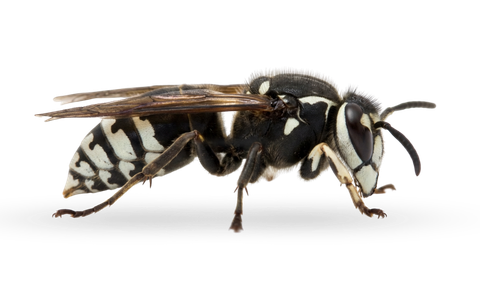
Bald-Faced Hornet
Found in trees, shrubs, rooflines, sheds. These hornets build large gray paper nests; highly defensive when nests are disturbed.
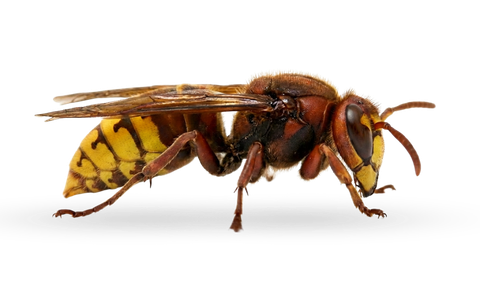
European Hornet
Active day and night, these hornets are attracted to lights and capable of nesting inside structures including wall voids, barns, hollow trees and attics.
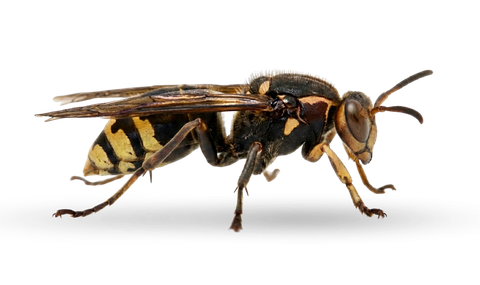
Structural Nesters
May go unnoticed until colony size increases and activity becomes visible. Typically found near wall cavities, soffits, and outbuildings.
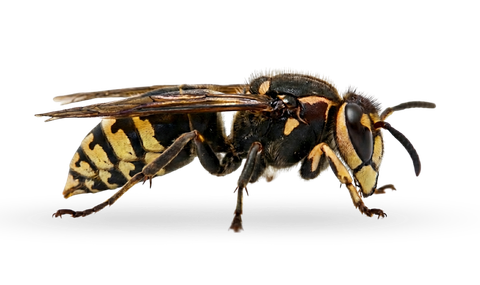
Aerial Hornets
Found near tree branches, overhangs and tall vegetation, aerial hornets prefer elevated, protected nesting sites away from ground disturbance.
-
General Hornet Behavior
- Active primarily during warm daylight hours (some species active at night).
- Hunt insects to feed developing larvae.
- Highly territorial and defensive near nests.
- Activity peaks in late summer when colonies reach maximum size.
-
General Hornet Infestation Sites
- Tree branches, dense shrubs, and wooded edges.
- Roof eaves, soffits, and building overhangs.
- Barns, sheds, garages, and other outbuildings.
- Wall voids, attics, or hollow trees.
-
General Signs of Hornet Infestations
- Large papery nests visible in trees or attached to structures.
- Frequent hornet flight paths to and from a single location.
- Increased insect activity around outdoor work or living spaces.
- Hornets gathering near lights, sap, or insect-heavy areas.
-
The Dangers of Hornets
- Painful stings and the ability to sting multiple times.
- Aggressive colony defense when nests are approached.
- Increased risk of allergic reactions or medical emergencies.
- Disruption of outdoor activities, livestock care, or property maintenance.